Cultist Castle
Unreal, First Person Shooter
Cultist Castle
Unreal, First Person Shooter
Cultist Castle
Unreal, First Person Shooter

Hotel California - Horror Project
Hotel California - Purpose
Created in Fall 2019, the successor to "Cultist Castle," Hotel California is a level designed to fit in a Horror game, akin to a scary walking simulators like P.T. The level is created in Unreal Engine 4, using free assets from Epic and sourced from sites such as Sketchfab.
The seed for this level was a two sentence horror story to ground the narrative of the level and inspire some game mechanics.
I had brainstormed something along the lines of "Finding myself back in bed I was relieved. Now I wish I could just wake up already."
This evolved over my production timeline and the "bedroom" was changed to a "hotel room" and thus my prompt evolved into something that feels inspired by the song Hotel California by the Eagles (which this level somewhat is).
Gameplay Video
Long (4:26) Plathrough of Hotel California
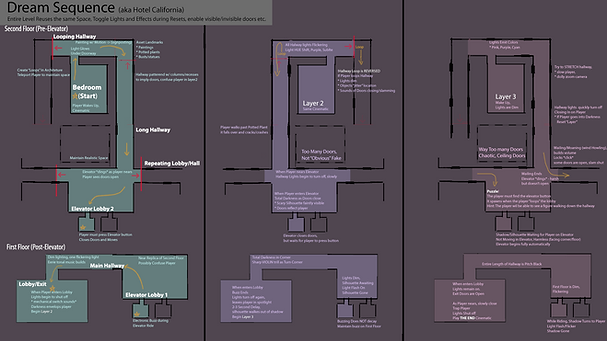
Initial Papermap for "Dream Sequence" Hotel
Preproduction
For this project the paper map is quite sparse in objects and "things" but due to the nature of the level experience I focused on detailing events and triggers in the level space. Of course the rooms such as "Bedroom" needed furniture, and it would be nice to plan that out, hopefully we all know what a hotel room should look like and I omitted working on furnishing until after late after my white boxing steps.
I eventually found many image references to fill the rooms with furnishing so it all worked out I think. I was quite focused on the experience over the look of this level as I am not an aficionado of the horror genre, due to being quite squeamish.
Whiteboxing
Whiteboxing for this project was very streamlined as I became familiar with the tools in UE4, as well as my choice to avoid furnishing the level I did not even block out the furniture (which might have been an oversight).
Due to the focus on the experience, and having more triggers in this project than normal, I breezed through blocking out the spaced and began putting together the Level Blueprint, as well as creating blueprints for the moving objects and the looping hallways. The looping hallways were creating by following a tutorial on YouTube as well as creating dummy space behind the linking portals to help blend the lighting conditions.
YouTube Tutorial: https://youtu.be/F28NKqG7ce8

First Half of Level

Prototyped Level, Whitebox

Second Half of Level
Narrative Pass: Much Audio Feedback
One of my greatest challenges working on this project was getting the players immersed and controlling how "intense" and "suspenseful" the experience was for them.
I knew there was a relationship between good horror levels and a keen sense for audio. I do not have a background in sound design, nor did my many resources help guide my untrained ear into horror perfection. I feel that is the one area that was "worst" in the level and could use a whole second project just to clean up and make special.
After some one-on-one feedback from playtesters and some additional guidance throughout the rest of the project lifetime, I began to get a grasp on sound, but I don't feel it surpassed "good enough."
Otherwise, this week in the project was something I enjoyed working on immensely. I had already planned a narrative for the level during pre-production, I now had more time to delve into that experience and create it.
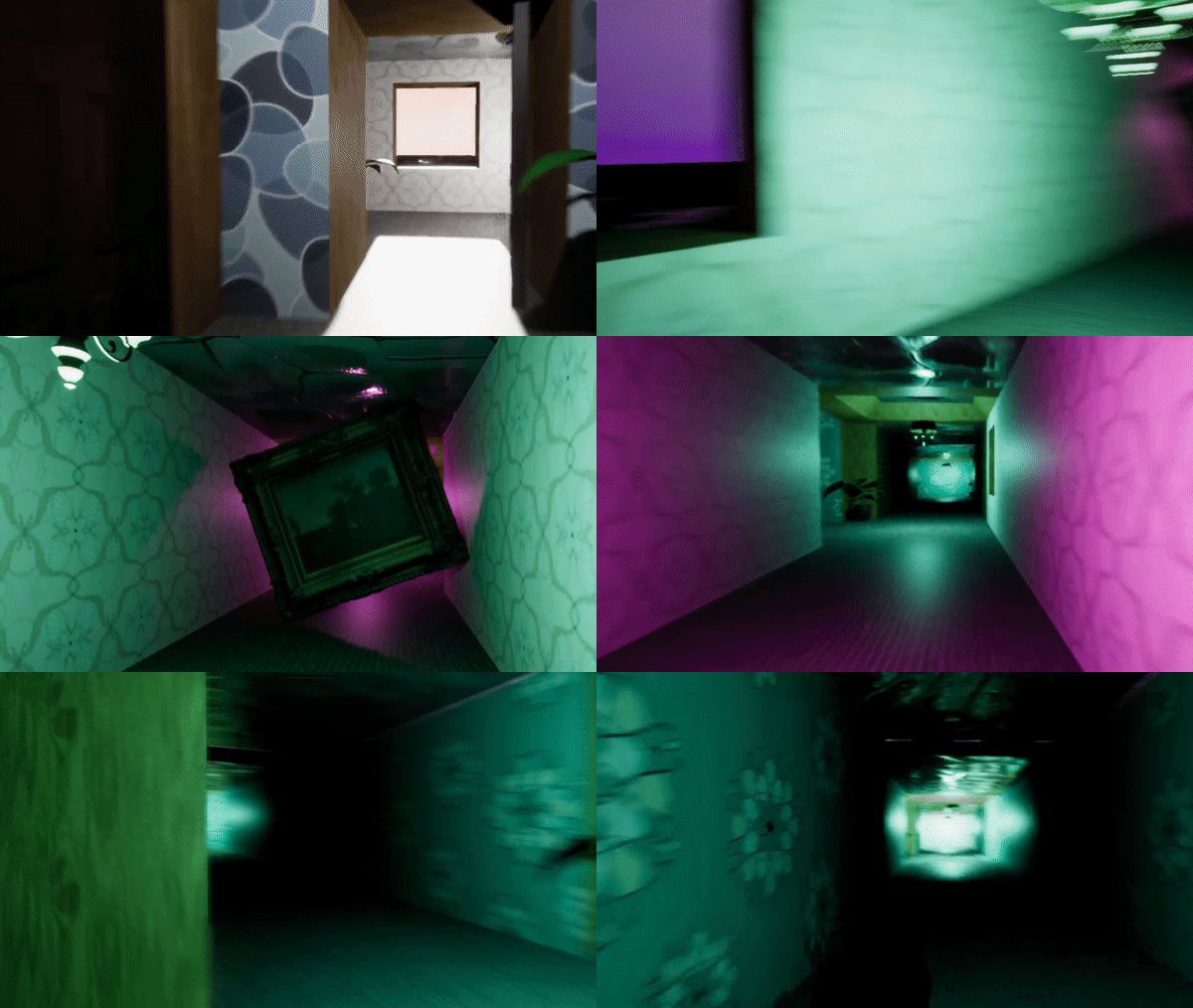
Post Art-Pass, Enter Madness Sequence .Gif
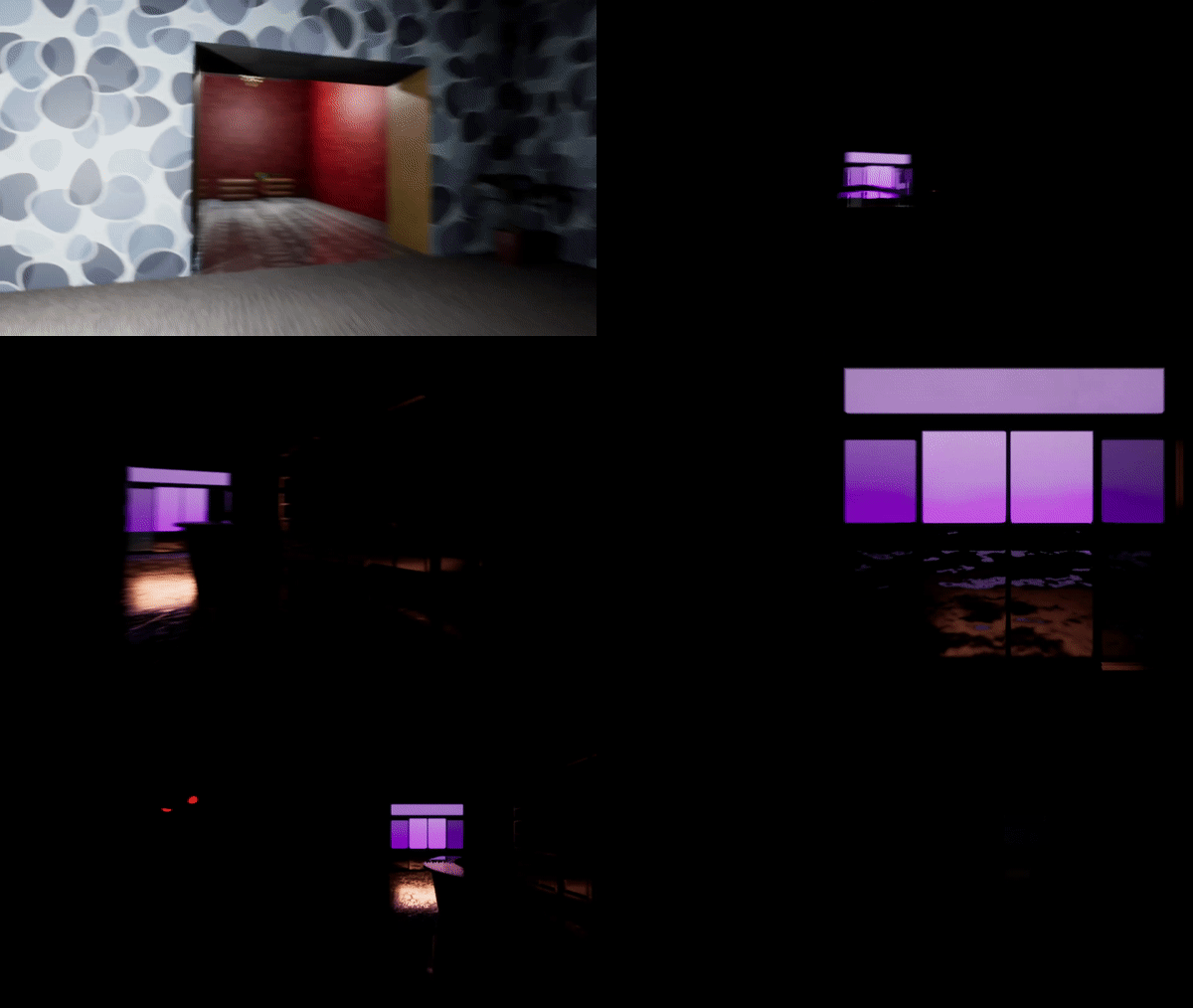
Post Art-Pass, Exit Sequence .Gif

Bedroom, After Art Pass.
Art Pass:
After the long week of fiddling with audio, I began importing the curated assets I had been cultivating on Sketchfab. Using community assets for everything except the walls and floors, I was able to flesh out the tone of each room. After a certain point thought, the free models I was using began to impact my personal computer's performance, and I discovered many of the models had way too many polygons. I couldn't always find a suitable replacement, so some rooms are more sparce than others, and performance was impacted.

I had created a few prototype furniture pieces to test the functionality that I needed in my level. There were each cube based blueprint actors, with static meshes of the models they represented. This division between functionality and where the visuals were attached allowed me to change the models on the fly when I inevitably replaced nearly half of my models. This also made it easy within the level blueprint to make each object move as a group, due to the fact they were all of the same blueprint object under the hood.
Upper Elevator Lobby Area, After Art Pass
The final room in the level is one that I am most dissatisfied with. The room feels empty when compared to my reference images for hotel lobbies. I had to reuse assets like tables and chairs, when I would rather have unique comfortable recliners and other new furnishing to create an "inviting environment" that hotels would typically aim for.
I decided enough was enough for this project, and that the workload-to-payoff ratio was too skewed for this to be worth updating and changing for the class. However if I were implementing this for my own personal project I would want to keep improving this room and remodeling it to fit a more typical hotel lobby feeling.

Exit/Entrance Lobby, After Art Pass.
What's Next?
This project was completed in December 2019, and I am still growing as a designer and developer working in the Unreal Engine.
I expect my capabilities to continue to grow and I will definitely reflect on this project, as it stands out to me as having the most clear path forwards for areas that need specific improvement. I don't expect to be able to revisit this level anytime soon, especially as my workload only increases as time goes on, but I do expect to dredge this up first when I do get free-time to revisit my work.
Map Showcase
Visual Walkthrough of Level Design Elements

Another Unreal Project
Cultist Castle, First Person Shooter
